• Distributable income per share (DIPS) increased by 9.6% to 60.3 cents
• Net operating income (NOI) increased by 5.2%, driven by contractual rental escalations, improved occupancy levels, income from newly developed buildings, and lower net finance costs
• Weighted average annual trading density growth of 4.2%
• Gearing improved to 25.1%, ICR strengthened to 3.15 times, and the cost of debt reduced to 8.9%
• Interim Dividend Per Share (DPS) increased by 9.1% to 48.0 cents
• High occupancy and collection rates of 93.7% and 100.1%, respectively
• Development activity at Waterfall City totaling 86 507m² of GLA representing R2.1 billion of capital investment
• 1.3 MWp rooftop PV installed YTD and 3.3Ml of backup water capacity added, strengthening energy and water resilience
10 March 2026 – Attacq Limited (“Attacq”), The JSE-listed REIT and strategic development partner of Waterfall City, today reported DIPS growth of 9.6% to 60.3 cents for the six months ended 31 December 2025, declared an interim dividend of 48.0 cents per share, and raised its full-year guidance to between 11% and 14%.
Jackie van Niekerk, Attacq CEO, said: “Our interim results reflect continued delivery against our strategic priorities. Our portfolio continues to perform strongly, and we are seeing the benefit in our performance. Market rentals are growing, our development pipeline is active, and our balance sheet is in good shape. We are confident that we are firmly positioned as a catalyst for sustainable growth driving value for our stakeholders.”
DIPS increased by 9.6% to 60.3 cents (December 2024: 55.0 cents), driven by contractual rental escalations, improved occupancy levels, income from newly developed buildings, and lower net finance costs.
Gross revenue increased by 8.9% to R1.6 billion and rental income rose by 4.9% to R1.5 billion. Net operating income increased by 5.2% to R936.9 million (Dec 2024: 16.8% to R890.3 million) and, on a like-for-like basis, rose by 5.7%, demonstrating the strength and stability of the group’s underlying property platform. Total assets increased to R25.2 billion, with the NAV attributable to equity owners of Attacq amounting to R13.5 billion, equivalent to R19.32 per share.
Development momentum at Waterfall City

During the interim period, the JNB 12.1 Vantage data centre was completed, adding 5 576m² of effective GLA to Attacq’s portfolio.
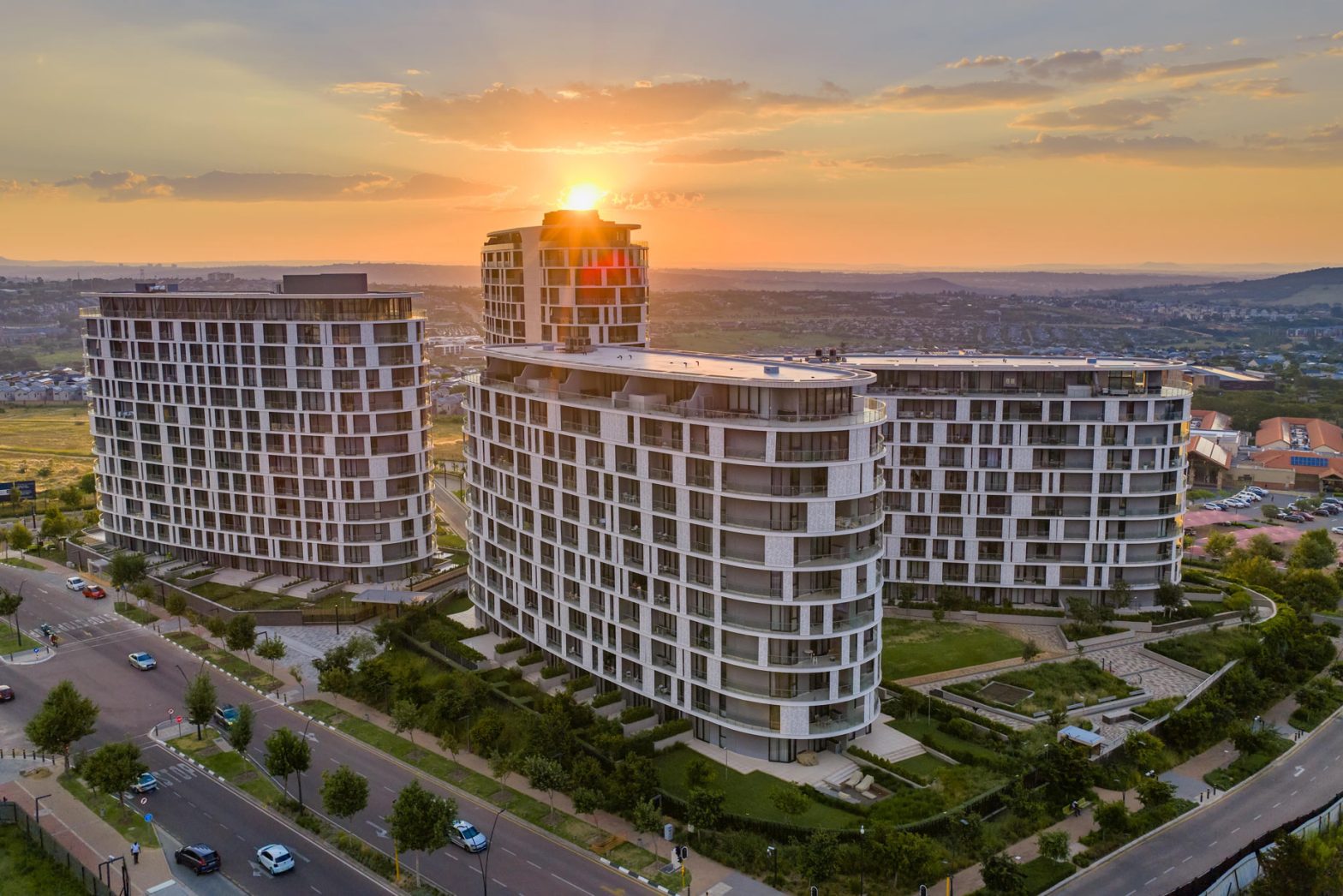
The group also achieved practical completion of Galileo, the fourth and final tower in the Ellipse Waterfall development, adding 220 residential units to the precinct. 96.8% of units have been sold to date, further showcasing residential demand in Waterfall City.
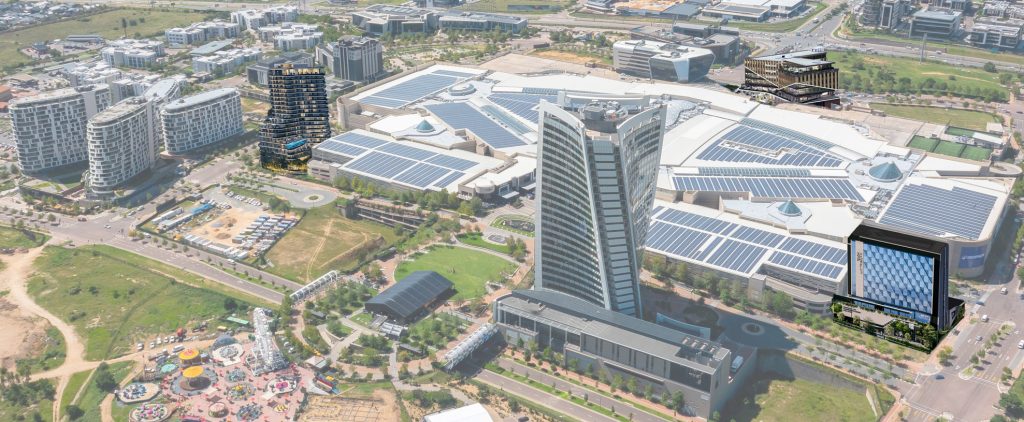
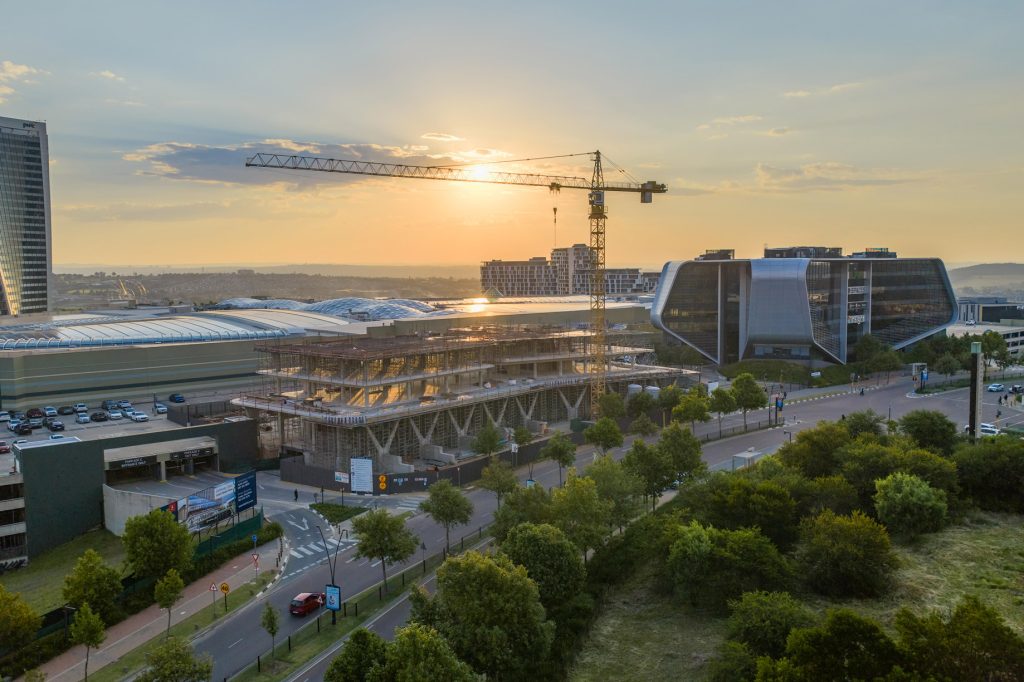
These developments form part of a broader pipeline aimed at strengthening Waterfall City’s position as one of South Africa’s leading mixed-use precincts. In addition, construction of the Gateway East offices commenced and the next residential development, Aspire Waterfall City, has been launched. The twenty-story development comprises 217 units of which 145 units have been pre-sold to date.
Development activity across the precinct remains robust, with 86 507m² of developments under construction and approved pipeline projects, valued at approximately R2.1 billion. Waterfall City’s effective share represents 47 256m² of GLA, with an effective capital investment of R1.3 billion.
Strong portfolio performance
Across the completed South African real estate portfolio, occupancy improved to 93.7% and 92.5% of leases expiring in the period were successfully renewed, reflecting strong client demand across the group’s retail, collaboration and logistics hubs.
Collections remained consistently strong at 100.1%, demonstrating the quality of the group’s client base. Operational efficiencies also improved, with the municipal recovery ratio rising to 95.3%, supported by the continued rollout of rooftop photovoltaic systems and enhanced real-time utility monitoring.
Retail-experience hubs maintained high occupancy levels of 97.8%, while collaboration hubs recorded occupancy of 88.4% as many businesses are returning to work full time.
Portfolio trading density increased by 4.2% to R4 349/m², supported by a 2.9% increase in total tenant turnover to R15.3 billion, while the rent-to-turnover ratio remained stable at 6.7%, highlighting the sustainability of client performance across the portfolio.
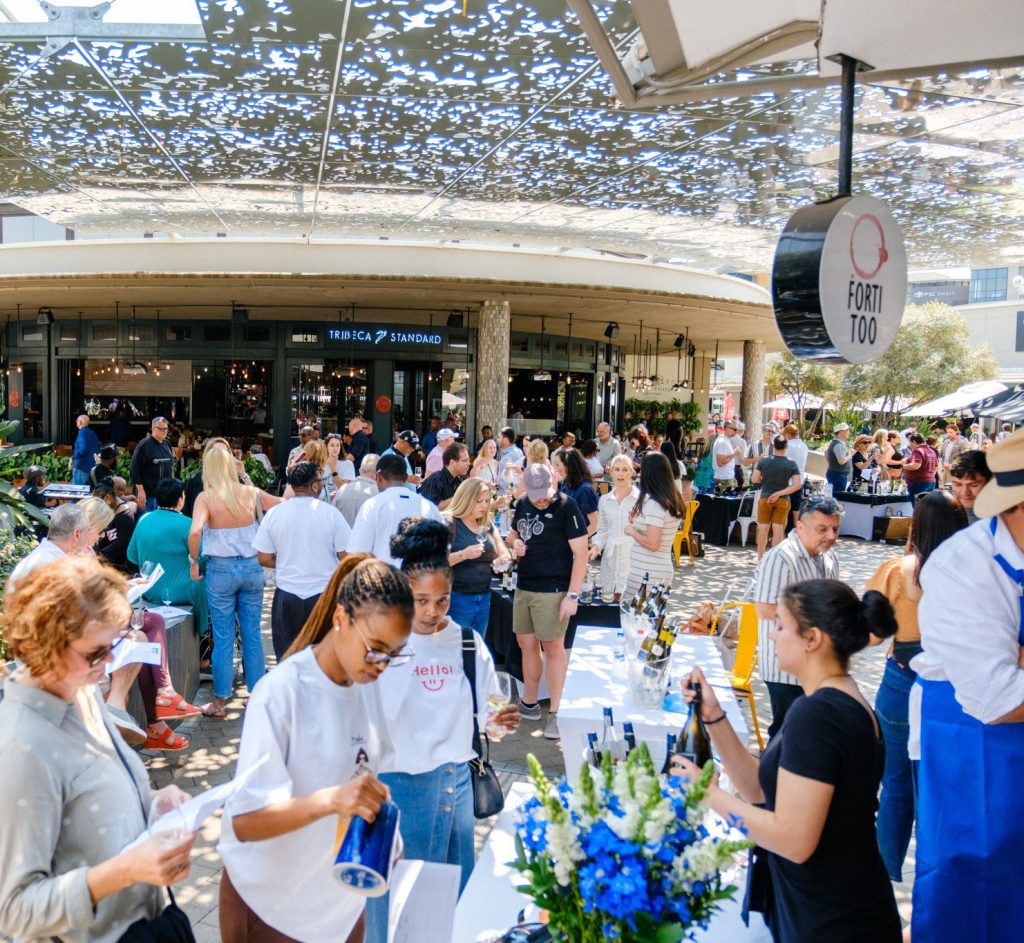
Mall of Africa continued to strengthen its position as one of South Africa’s leading retail destinations, supported by strong tenant demand, ongoing brand investment and a curated experiential retail strategy. During the period, the mall welcomed five new international and premium brands, Coach, Kate Spade, Silky, Kids Around and Bootlegger, while eight existing retailers upgraded their stores, including Cotton On, Emporio Armani and G-Star. Experiential activations also played an important role in driving footfall and engagement, with initiatives such as the Pantry pop-up and the Hair-itage activation. These initiatives contributed to a 4.2% improvement in trading density over the 12-month period, while occupancy remained exceptionally strong at 98.6%.

Beyond Mall of Africa, Attacq’s regional retail hubs continued to perform well. Eikestad Mall in Stellenbosch, Garden Route Mall in George and MooiRivier Mall in Potchefstroom all delivered positive operational metrics during the period, supported by strong tenant demand, targeted refurbishments and active placemaking initiatives. MooiRivier Mall recorded 7.6% growth in trading density and a 2.4% increase in footfall, while Garden Route Mall delivered 2.9% trading density growth and maintained exceptional occupancy of 99.8%. Eikestad Mall also continued to perform well with 3.3% trading density growth and occupancy of 97.9%, supported by store upgrades and its role in establishing the local Special Rating Area to enhance the cleanliness and safety of the surrounding precinct.
Balance sheet remains robust
The group maintained a strong balance sheet, with gearing remaining stable at 25.1%, while the interest cover ratio improved to 3.15 times, reflecting higher net operating income and lower finance costs. Total interest-bearing borrowings increased marginally to R6.9 billion, with no refinancing required before July 2027, providing significant funding stability.
The group’s weighted average cost of debt decreased to 8.9%, supported by refinancing initiatives and optimisation of its hedging profile.
In October 2025, GCR reaffirmed Attacq’s A+[ZA] long-term and A+[ZA] short-term credit ratings with a stable outlook, reflecting the strength of the group’s asset base and balance sheet.
Attacq ended the reporting period with available liquidity of approximately R1.5 billion, providing ample capacity to fund its development pipeline and operational requirements.
Attacq interim CFO Peter de Villiers said the group’s financial performance reflects disciplined capital management and the resilience of its earnings base. “Our interim results demonstrate the quality and sustainability of Attacq’s cash-generative property platform. DIPS growth of 9.6% was supported by improving operational performance, stable occupancy and lower funding costs. With low gearing at 25.1%, strong liquidity and an improved interest cover ratio of 3.15 times, the group remains well positioned to fund its development pipeline while maintaining a strong and flexible balance sheet.”
Sustainability and operational efficiency
Attacq continued to invest in sustainability and operational resilience initiatives during the period. The rollout of rooftop photovoltaic (PV) systems across the portfolio has accelerated during the period, reducing reliance on grid electricity while helping to manage energy costs and improve municipal recoveries. By combining on-site solar generation with real-time monitoring through the group’s digital Smart Utility Hub, Attacq is able to track electricity consumption and recoveries more effectively, contributing to an improvement in the municipal recovery ratio to 95.3%.
In parallel, the group continued to invest in water resilience infrastructure. Over the past few years, Attacq has taken deliberate steps to strengthen the sustainability and reliability of its precincts, expanding infrastructure through the completion of an additional 1.3 MWp of rooftop solar PV and installing 1.3 million litres of water backup capacity. These investments help ensure that precincts remain operational and protected during periods of strain on municipal systems.
Similar measures have been implemented across other assets in the portfolio. To further strengthen resilience, Attacq has established a dedicated task team that actively monitors and oversees water systems across its precincts, working closely with clients, Johannesburg Water and other stakeholders to support coordinated planning, rapid response and responsible stewardship of this essential resource.
These initiatives reflect Attacq’s focus on operational resilience, sustainability and protecting tenant trading continuity.
Interim dividend and outlook
The board has declared an interim dividend of 48.0 cents per share, representing a payout ratio of 79.6% of distributable income. Looking ahead, the group has upgraded its full-year FY26 DIPS growth guidance to between 11.0% and 14.0%, while maintaining a dividend payout ratio of approximately 80%.
Reflecting on the group’s performance and the year ahead, van Niekerk said: “We enter the second half of the year with good momentum. Our strategy remains firmly focused on South Africa, with Waterfall City as our primary growth engine, supported by a strong Rest of South Africa portfolio. Together, these two drivers anchor our commitment to developing dominant, high performing precincts across the country.